Dog Cyst vs Tumor: How to Tell the Difference & What To Do Next
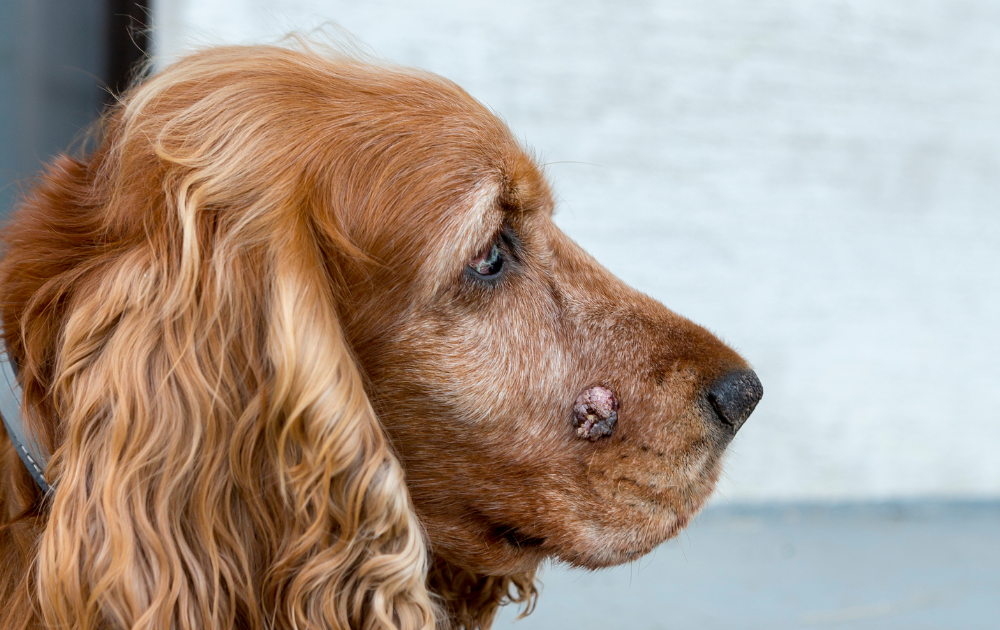
How can you tell the difference between a dog cyst vs tumor? Cysts are soft, squishy lumps that can be moved fairly easily when you touch them. Tumors are much harder and cannot usually be moved. They can also be cancerous in some cases, unlike cysts, which are typically benign.
We’ve all been there. You’re cuddled up with your dog and petting them when you come across something that doesn’t feel right. A lump. You panic, instantly wondering if it’s cancer and they’re going to have to go through treatment. But you don’t need to worry right away. Not all lumps are bad, and they might not be as big a cause for concern as you think.
Most of the time, the odd lumps and bumps you find will actually turn out to be cysts or benign tumors that are completely harmless. While every lump should be checked out by your vet as soon as possible, I’m here to ease your mind. I’ll help you learn more about cysts, tumors, and how you can tell the difference between them.
Key Takeaways
- Cysts are not typically cancerous, but tumors can be malignant or benign
- Usually, cysts are soft and movable, whereas tumors are hard and rigid
- Not all cysts need to be removed; the same goes for benign tumors
- Always take your dog to see a vet when you come across new lumps
What Exactly Is A Cyst On A Dog?
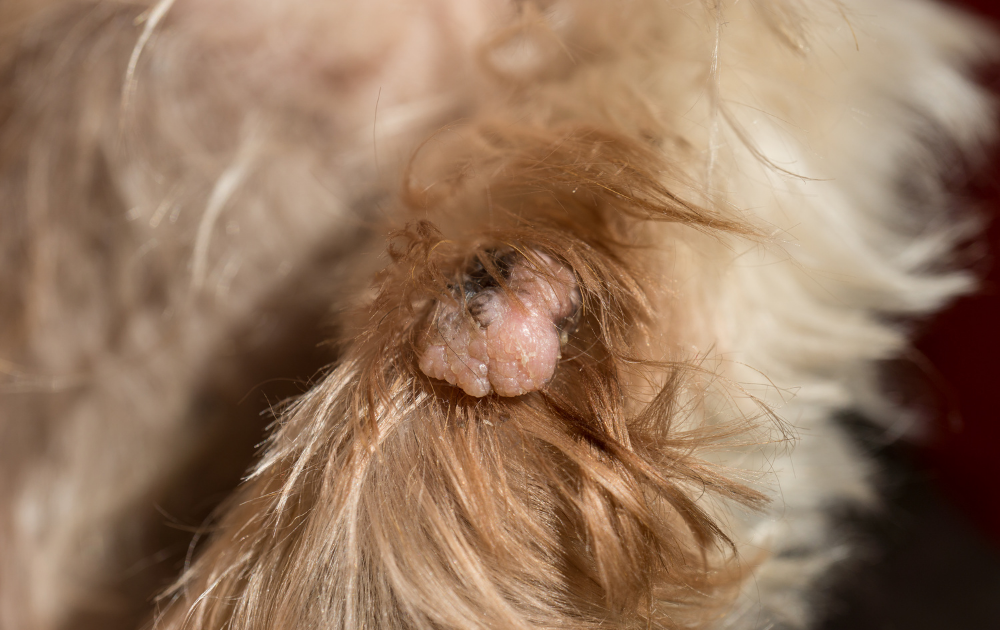
Generally speaking, dog cysts are benign bumps that rest just under the skin. They are filled with fluid and grow quite slowly, usually as a result of a blockage in hair follicles or glands. Cysts are normally harmless growths and pose no risk to your dog unless they are ruptured or become infected.
Understanding Common Dog Cysts
Sebaceous Cysts: These cysts are small and grow quite slowly. They are filled with a thick, oily substance known as sebum, and they look like raised bumps that secrete a thick, white pus when ruptured (much like whiteheads in humans).
Follicular Cysts: These form when the hair follicles are blocked, which causes a fluid sac to form on the dog’s body. Sometimes, these cysts can rupture, releasing the fluid trapped inside.
Interdigital Cysts: These cysts are usually caused by chronic inflammation and are commonly found between the toes. They are normally seen in overweight dogs or those with allergies.
Aporcine Sweat Gland Cysts: These cysts normally form in the sweat glands, and they appear as small, blue, or clear lumps just under the skin.
Dermoid Cysts: These cysts are rare and congenital, and can either develop later in a dog’s life or be present from birth. They normally contain a combination of hair, skin, and other tissues.
Other Benign Growths
Skin Tags: These are usually harmless, and they appear in areas where the skin rubs together. This is why they are commonly found in the armpits or eyelids. The only time they can be a cause for concern is when they become irritated.
Warts: These are actually caused by a virus, and they are usually found in young dogs in and around their mouths. Most of the time, they are benign and go away on their own, but they might need treatment in more severe cases.
When To Be Concerned About Cysts
Cysts only become a problem when they start to affect your dog’s life or cause discomfort. A common example is cysts on the eyelids, as these can cause problems for your dog’s sight when they are allowed to grow. Similarly, large cysts on the feet and armpits can cause a great deal of discomfort in their daily life.
Similarly, any cysts that rupture are a problem and cause for concern. This is because it is not only painful for your dog, but they are also more susceptible to infections afterwards. When a cyst ruptures, it is important to see a vet right away. That way, the wound can be cleaned properly and excess fluid can be drained. Your dog might also need antibiotics.
Benign vs Malignant Tumors in Dogs
A tumor is an abnormal mass of tissue, much like in humans, and they form when the cells grow and divide more than they are supposed to. Similarly, cells that don’t die when they are meant to can also cause tumors to form. They can develop in any part of the body, and the behavior of tumors can vary massively according to the type and location.
They can be classed as malignant (harmful) and benign (harmless), which is something I explore more in the next section. There are several things that can cause tumors to grow in dogs, and these vary from genetics and environment, all the way to their age. The risk of developing a tumor increases with age as the body slows down on repairs and regeneration.
Cancerous vs Harmless Tumors
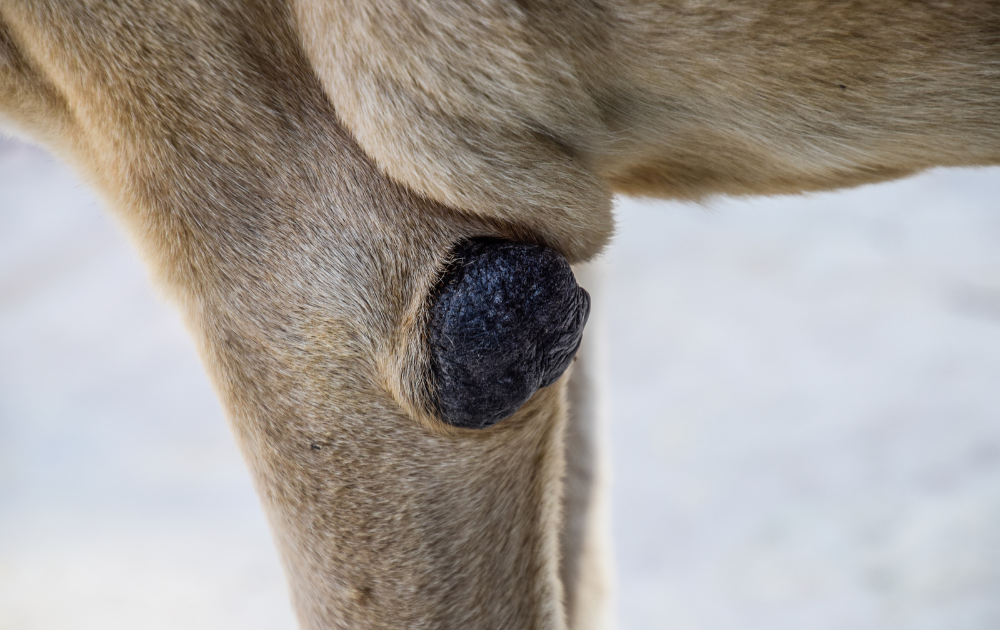
Benign tumors are non-cancerous and don’t spread to other parts of the body. While they can still grow large enough to cause health problems for your dog, they are not usually life-threatening. Also, they don’t always grow quite as rapidly (although this isn’t a certainty). While they might need to be removed, many of them can be left alone.
Malignant, or harmful, tumors are cancerous and will spread to other parts of the body. They are much more dangerous and can spread through tissue and organs as well as lymph nodes. They tend to grow rapidly, and many malignant tumors are classed as aggressive, meaning they need rapid intervention to give your dog the best chance.
Understanding Common Dog Tumors
Lipomas: These are benign tumors, and they are fatty growths that are soft, movable, and quite round. They are commonly found in older dogs or those who are overweight, and they are commonly known as fat lumps.
Mast Cell: These tumors can have massive differences in their appearance, and they have the chance to be malignant or benign. They can look more like warts or ulcers, and early removal is imperative to prevent cancerous cells from spreading.
Melanomas: These tumors are malignant and are commonly found on toes or in mouths. They are very prone to spreading if they are not caught early, and they can be black, brown, pink, or grey in appearance.
Squamous Cell Carcinoma: These are considered to be aggressive cancers, and they spread rapidly if not treated quickly. They are red and angry in appearance, and they are often ulcerated and irregular. They can be easily treated if caught early.
Fibrosarcomas: These tumors are malignant and originate within the fibrous connective tissue. They are firm, fast, and invasive, which means they require rapid treatment.
Histiocytomas: These tumors are benign, and they can appear as inflamed or uninflamed. They are small, almost like buttons, and they usually form on younger dogs. Normally, they go away in their own time and don’t need treatment.
Cyst vs Tumor: Key Differences
Lumps and bumps are always going to be a worry. However, there are some key differences between cysts and tumors that might help keep you calm while you’re waiting for your appointment with the vet.
Feel Test: What Texture Tells You
Tumors are usually hard and firm, and they are difficult to move. However, there are also tumors that can be quite soft and might be easier to wiggle with your fingers. They tend to be shaped irregularly, and their size and shape can change over time.
On the other hand, cysts are very smooth and round most of the time. They are easy to move, and they are usually soft because they are filled with fluids or semi-solid material such as hair and skin. While some cysts might be harder to move, the common rule of thumb is that they are almost always movable under the skin.
Other Differences
Tumors and cysts tend to have different growth patterns. Tumors often grow very rapidly, and if they are cancerous, then they will spread to other parts of the body. In cases such as this, you will likely find multiple lumps on your dog. One of the few exceptions to this are fat lumps, which feel like tumors but are actually small fat deposits found in older or chunkier pups.
Cysts grow quite slowly, especially when compared to tumors, and some of them will swell and then remain that size. They do not spread to other parts of the body. While they might grow enough that they need to be removed, many of them can be left as they are and don’t require any medical intervention.
It is important that while benign tumors can usually be left alone and won’t cause any harm, malignant tumors pose a direct risk to your dog’s health. They are deeply harmful and need to be treated quickly. Cysts only need urgent treatment if they rupture or become infected, which makes them less of a concern.
Why Vet Visits Matter
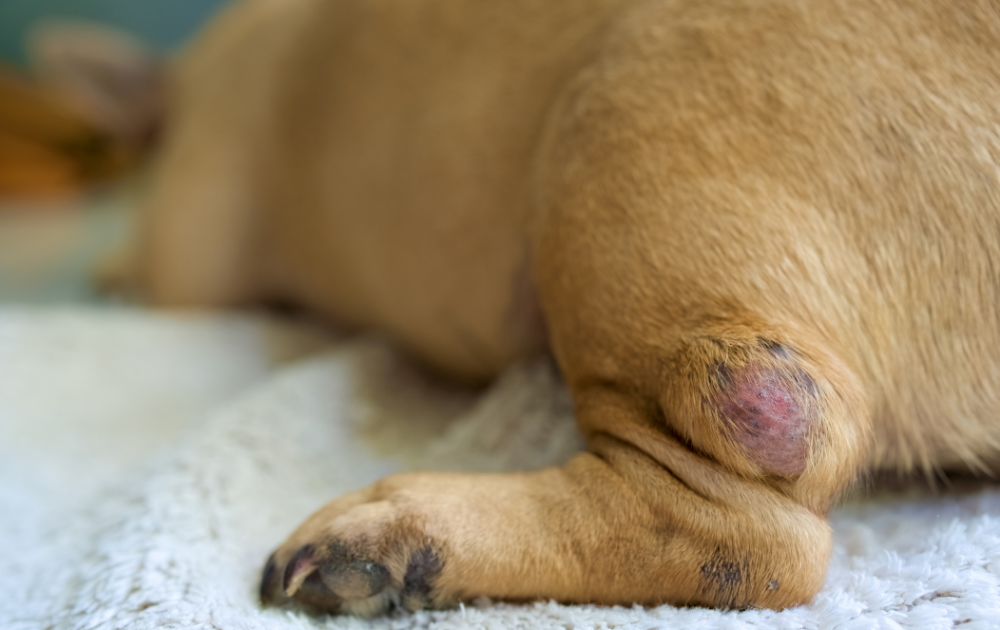
While this is a good starting point for determining the difference between tumors and cysts, it isn’t always that simple. Sometimes tumors feel like cysts, and cysts feel like tumors. It is never worth taking the risk. This is why a vet visit is imperative the second you find a strange lump on your dog. They are the only ones who can properly diagnose your pup and treat them.
Testing a Lump: What to Expect
During your vet visit, your dog will likely receive a full physical exam. This ensures they are in good health and checks for any underlying conditions that might have been missed in past visits or recently cropped up. They will probably take a small sample of the mass for testing as well, which can then tell them what kind of growth it is.
In some cases, your vet might also order blood work, x-rays, and ultrasounds to ensure nothing is missed and check for other issues in your dog. It can also be used to detect the spread of cancer, which is very important if the lump is a suspected tumor instead of a cyst.
Biopsy And Diagnostic Options
Fine Needle Aspirate (FNA) is a very simple test that can be used for diagnosing your dog. A small needle is used to collect cells from the mass, and those cells are then spread on a glass slide so they can be evaluated using a microscope. In some cases, your vet might even be able to examine the slides in-house instead of sending them away.
However, this will also depend on the type of mass. Some are harder to diagnose than others. In cases where this is true, your vet will send the slides to a diagnostic lab for further study. If the FNA doesn’t identify the mass, that’s when your vet will recommend a biopsy instead so that your dog can receive the treatment they need.
Biopsy procedures for dogs are very similar to those for humans. However, sedation or anaesthesia is usually required for dogs to help make the experience more comfortable for them. There are actually four types of biopsies that could be used on your dog, and your vet may choose one of the following options:
- Excisional Biopsy: This form of biopsy removes the entire growth and some of the cells around it so that everything can be tested thoroughly, and variable margins are included.
- Punch Biopsy: This takes a circular piece of the mass and the skin on it as a representative sample of the tissue for testing and diagnostics.
- Needle-Core Biopsy: This process is similar to FNA, where a needle is used to extract a sample from the mass. The difference is that it’s a larger needle and a larger sample.
Wedge (Incisional) Biopsy: This biopsy uses a scalpel to cut away part of the mass so that a deep tissue sample can be extracted from it for testing.
Costs, Timelines, and Results
The price of testing the lumps on your dog can vary according to the type of treatment you’ve selected. The area the growth is in, its size, and whether or not it is cancerous will also play a role in the final price of your pup’s treatment. Furthermore, each veterinary practice is likely to have its own way of pricing things.
The prices below are averages based on the common forms of treatment for lumps and cysts, alongside testing processes such as biopsies:
- Fine Needle Aspirate (FNA): $20-150
- Biopsy (Skin): $350-$2,500
- Surgical Removal (Small): $200-$750
- Surgical Removal (Large): $1000+
- Chemotherapy (Per Dose): $150-$600
- Radiation Therapy (Total): $2,500-7,000
Your vet will recommend the best course of treatment for your dog’s health. They want your best friend to recover just as much as you do. Sometimes that means putting them through the discomfort of a biopsy or surgery to ensure it.

Treatment Options and When to Act
As a general rule, any lumps that persist for more than a few days should be looked at by your vet. The same goes for if the lump starts becoming bigger, or if you notice your dog is in pain or discomfort. While cysts are a watch-and-wait kind of growth, tumors are a different story, and the sooner your dog is seen, the sooner they can get the treatment they need.
Treatment options for tumors will usually include:
- Surgical removal is the preferred method for malignant and benign tumors to ensure that the growth and any cancerous cells are removed. In the case of malignant tumors, some of the healthy cells will also be removed to be safe.
- Chemotherapy is used for malignant tumors to help kill cancerous cells. It is used in combination with surgery, and can be given orally or through an injection.
- Radiation therapy targets cancerous cells with a high-powered laser. This treatment is used for tumors that are not easily reached through surgery or to kill and remaining cancerous cells after the surgery has taken place.
Treatment options for cysts will usually include:
- Surgical removal is an option for cysts which are very large and causing discomfort to your dog. This procedure will include excision of the cyst and then the removal of the sac to prevent it from reforming.
- Drainage can be performed on some cysts to remove any fluid that has built up. However, this is a temporary option, and repeated drainage can lead to a higher risk of infection over time.
- Antibiotics will be prescribed if the cyst has become infected or inflamed. They can be oral or topical to help with the bacteria in and around the wound.

When To Treat Or Remove A Growth
All growths should be treated by your vet right away. Cysts usually only need cleaning, and they might require a course of antibiotics if there is an infection. However, many tumors will need to be removed as soon as possible. While it is possible to leave benign tumors that don’t pose a risk to your dog’s health or seem likely to grow, many vets will recommend removal.
Cysts that are very large or keep returning will likely be selected for surgery. This is to give your dog a better quality of life and reduce the risk of infection. Malignant tumors will need to be removed quickly to help prevent the spread of cancerous cells and ensure your dog gets the treatment they need to recover. This could include chemotherapy or radiation therapy.
If a tumor starts to bleed, you should see your vet immediately. In most cases, the bleeding will stop with your help, but it is likely to recur. It is usually a sign that further treatment is needed. Similarly, cysts that rupture should be treated by a vet quickly so that excess fluid can be drained and the area can be properly cleaned.
The Risks Of Ignoring Growths
No one wants their dog to suffer, but ignoring growths on your pup can cause just that. Cysts and tumors might be very different, but they can both cause pain and discomfort if left untreated. Some of the common risks of ignoring growths on your dog include:
- Benign tumors becoming malignant
- The spread of cancerous cells
- Metastasis
- Infection and inflammation
- Pain and discomfort
- Ruptures and further swelling
- Difficulty treating the growth (due to the time passed)
Recovery And Care
The recovery process will look different for every dog. It will depend on the growth, how big it was, and how aggressive any cancer in your pup was. But the most important thing is ensuring you keep an eye on your dog and check them over for new growths on a regular basis. You should also ensure you have frequent checkups with your vet to keep things under control.
Those regular visits to the vet aren’t just a great way to ensure a good prognosis for your dog if a malignant growth is found. They also give you a chance to get preventative care for other growths. Outside of this, pain management is essential to ensure your dog is living their best life, as is keeping them on a healthy diet and allowing them to get enough exercise.
Why Pet Insurance Matters
Cancer is one of the many conditions that pet insurance covers. Even if the lump on your dog turns out to be benign or a cyst, the cost of treatment and removal can still become quite expensive. Pet insurance is there to help take some of the pressure off so that you can focus on taking care of your dog and helping them through their illness.
Without pet insurance, the bills start mounting up, especially if a lump does turn out to be cancerous. If your dog is insured, all you need to do is pay the excess while the insurance company takes care of the rest. However, it is important to remember that most plans don’t cover pre-existing conditions, so get them covered before anything happens to them.
The best case scenario is that your dog remains in perfect health their whole life, and you were always covered just in case.


FAQs
Should I Remove A Cyst Or Tumor?
Typically, you can leave cysts unless they rupture or become a hindrance to your dog. Tumors, on the other hand, will usually need to be removed as quickly as possible if there is any growth or bleeding. A benign tumor can often be left for longer. Some can even be kept permanently if they aren’t growing or affecting your dog.
Can I Tell What It Is Just By Touch?
No, you can’t always tell what it is simply by touching it. While cysts are typically soft and easier to squish or move, there are also cases when tumors can feel similar. The only way you can be certain as to whether your dog has a cyst or a tumor is with a vet visit. That way, your vet will be able to help you with treatment plans.
What’s The Difference Between A Cyst And A Tumor?
A cyst is usually soft, round, and easily moved under the skin. In comparison, a tumor is much harder and firmer, and you won’t be able to move it. Cysts are not cancerous, but tumors can either be malignant or benign. This means there is a risk that they could be cancerous and a danger to your dog’s health.
Are Some Breeds More Prone To Lumps?
Yes, some breeds of dogs are more prone to lumps than others. Spaniels, Retrievers, and Boxers are prime examples of breeds that are more likely to develop lumps on their bodies. This doesn’t mean they will always be malignant; it’s just something that you need to look out for. All breeds are still at risk of developing lumps at some stage in their life.
Final Thoughts
It’s always worrying when you find an unusual lump on your dog. While it’s normal to panic and feel as though everything is falling apart, it’s important to remember that not all lumps are bad. Your vet is the only one who can make a diagnosis. Cysts are usually nothing to worry about, and most of the time, those hard tumors are completely benign.
However, it’s never worth missing an appointment just in case the worst-case scenario becomes a reality. The sooner cancer is caught in your dog, the better their chance of treatment and survival. I know it’s not easy, I’ve been through malignant and benign tumors with my pups, but those early vet visits when you first find lumps can save lives.
